Building Credit as a Newcomer to the United States or Canada
Start with the right definition of a credit history
Arriving in the United States or Canada often means starting with little or no locally reported credit information. That is different from having bad credit. A strong record from another country may help a lender understand your finances, but it usually does not transfer automatically into a U.S. or Canadian credit file.
Credit scores are calculated from information reported by lenders and other participating businesses. The record may include borrowing accounts, payment history, balances, credit limits, account age, and recent applications. If none of those accounts has been reported locally, a lender may have too little information to approve an application or may offer less favorable terms.
Your immigration status is not itself a credit score factor. However, lenders need to verify identity, address, income, and eligibility for the product. In the United States, a Social Security number is commonly used, but some lenders consider applicants with an Individual Taxpayer Identification Number. In Canada, a Social Insurance Number is often requested, although a lender may have other ways to match an application to a credit file. Requirements vary, so ask before submitting an application.
Do not assume that opening several accounts will solve the problem quickly. Each application can create a hard inquiry, and several inquiries close together may make you appear more dependent on new credit. The safer approach is to establish one manageable account, use it lightly, and build a record of payments that you can afford.
Choose a first account that limits the downside
A secured credit card is often a practical starting point in both countries. You provide a refundable deposit or other security arrangement, then use the card for a small purchase and pay the balance according to the account terms. The deposit does not make the borrowing free, and it does not guarantee that every issuer reports to every bureau. Before applying, confirm that the issuer reports regular activity to the major credit bureaus in your country.
In the United States, a conventional starter card may be available through a bank, credit union, or issuer that considers applicants with limited history. A secured card may have an annual fee or a high interest rate, so compare the total cost rather than focusing only on approval. In Canada, banks and credit unions also offer products aimed at newcomers or applicants establishing Canadian credit. These programs may have specific residency, employment, deposit, or documentation requirements.
A credit-builder loan works differently. You make scheduled payments while the borrowed funds are held and released under the lender's terms, often after the loan is completed. This can add installment-account history, but it creates a required monthly payment and may include interest or fees. It is not automatically better than a card. Choose it only if the payment fits comfortably within your budget and the lender explains how it reports the account.
Do not borrow merely to create activity. A small recurring purchase, such as a household subscription you already need, can be enough for a card strategy. Keep the cash needed for the bill in your bank account, and pay by the due date. Carrying interest does not improve a credit score.
Build a payment system before you apply
For a newcomer, the main risk is often not an unwillingness to pay but an unfamiliar system. Due dates, statement dates, automatic payments, address changes, and currency differences can create avoidable mistakes. Set up a simple process before the first statement arrives.
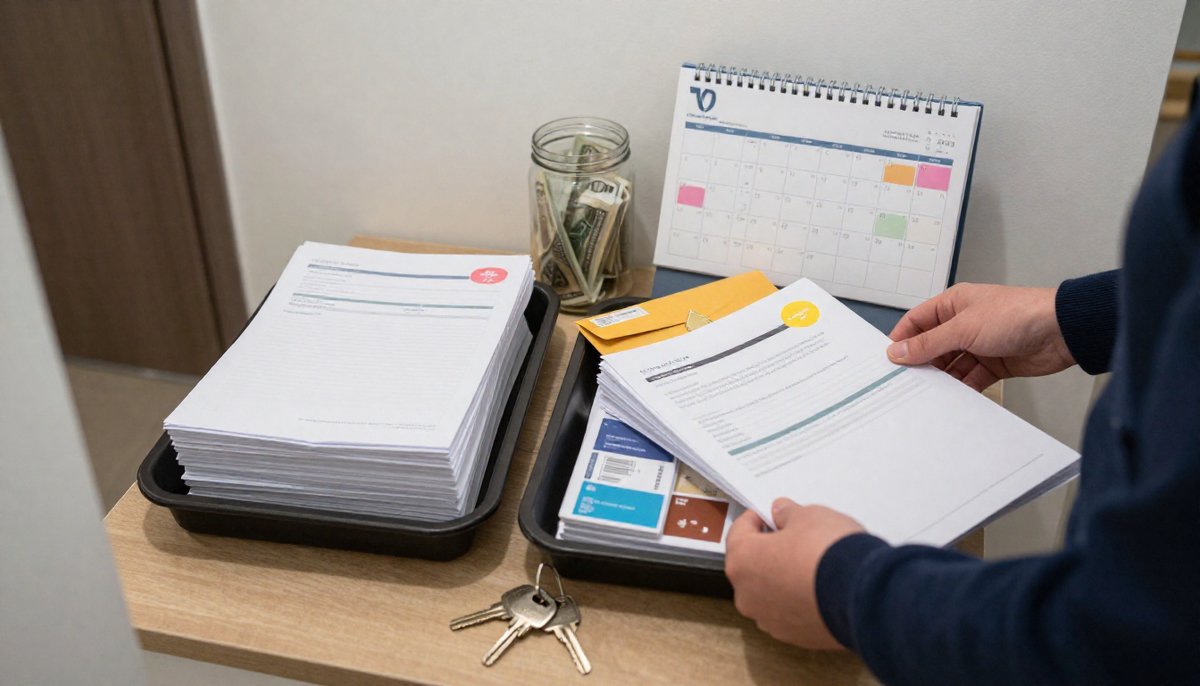
- Use one calendar. Record the payment due date and the statement closing date if the issuer provides it. A due date controls whether the payment is late. The statement date may affect the balance that is reported.
- Keep a bill reserve. Move the amount needed for the planned card purchase into a separate savings space or envelope. Do not spend that reserve again before the payment is processed.
- Use automatic payment carefully. An automatic minimum payment can prevent a missed due date, but it may leave interest accruing on the remaining balance. If possible, schedule an automatic full-balance payment after confirming that the linked account will have enough money.
- Check the first two statements. Confirm that payments posted, fees match the agreement, and the account information is correct. Save statements and confirmation numbers.
- Update addresses promptly. A move, shared mailbox, or change in phone number can cause missed notices or identity-verification problems.
Credit utilization is another reason to keep balances modest. It compares reported revolving balances with available limits. A card with a $500 limit can show a high percentage even after a relatively small purchase. Paying before the statement closes may reduce the reported balance, but only if the payment has enough time to post. Do not drain rent, food, or emergency savings just to make a score look better.
Monitor the record and correct errors
Once an account is active, review your credit reports rather than relying only on a score shown in an app. Scores can differ because scoring models use different data and versions. The report is the underlying record you need to inspect.
In the United States, the nationwide bureaus are Equifax, Experian, and TransUnion. In Canada, Equifax Canada and TransUnion Canada are the primary consumer reporting agencies. A lender may report to one bureau, several, or none, so one report may not match another. Obtain the reports available to you through the appropriate official channels and check the spelling of your name, addresses, inquiries, account status, limits, balances, and payment history.
If an account is unfamiliar, treat it as an identity or reporting issue, not as a reason to pay immediately. Contact the lender through a verified channel, document the conversation, and follow the bureau's dispute process when the information is inaccurate or incomplete. Provide focused evidence, such as an account statement, payment confirmation, or identification document with unnecessary private details covered. Keep copies and note dates.
A dispute does not erase accurate negative information simply because it is inconvenient. It is appropriate when the data is wrong, duplicated, belongs to someone else, or cannot be verified as reported. If fraud is possible, use the identity-protection and fraud-reporting resources available in your country and secure affected accounts.
Separate U.S. and Canadian decisions
Credit building is local. A U.S. account generally does not create Canadian bureau history, and a Canadian account generally does not create U.S. bureau history. If you may move between the countries, ask each lender what it reports and where. Do not close a useful account solely because you are relocating without first understanding the effect on fees, payment access, tax documentation, and credit history.
Rent, utilities, mobile service, and bank accounts deserve careful treatment. Some providers or reporting services may report certain payments, while others do not. A landlord's statement that rent payments "count" is not enough; ask which reporting agency receives the information, whether all payments are reported, and whether there is a cost. Never give sensitive identity documents to a service that cannot explain its privacy and cancellation practices.
For a hypothetical newcomer with a new job, a modest emergency reserve, and no local credit record, a sensible first year might involve one low-limit card, one recurring purchase, a full payment each month, and quarterly report checks. The person might delay a second account until income is stable and the first account is being managed without reminders. Someone who expects to apply for an apartment or vehicle loan soon should avoid unnecessary applications and ask prospective lenders which documentation they accept before applying.
Credit is one part of financial stability, not a substitute for cash savings or affordable housing. Protect the reserve that covers groceries, transportation, immigration-related costs, and unexpected repairs. A slower credit-building plan that never misses a payment is usually more useful than a faster plan that creates interest, overdrafts, or expensive debt.